
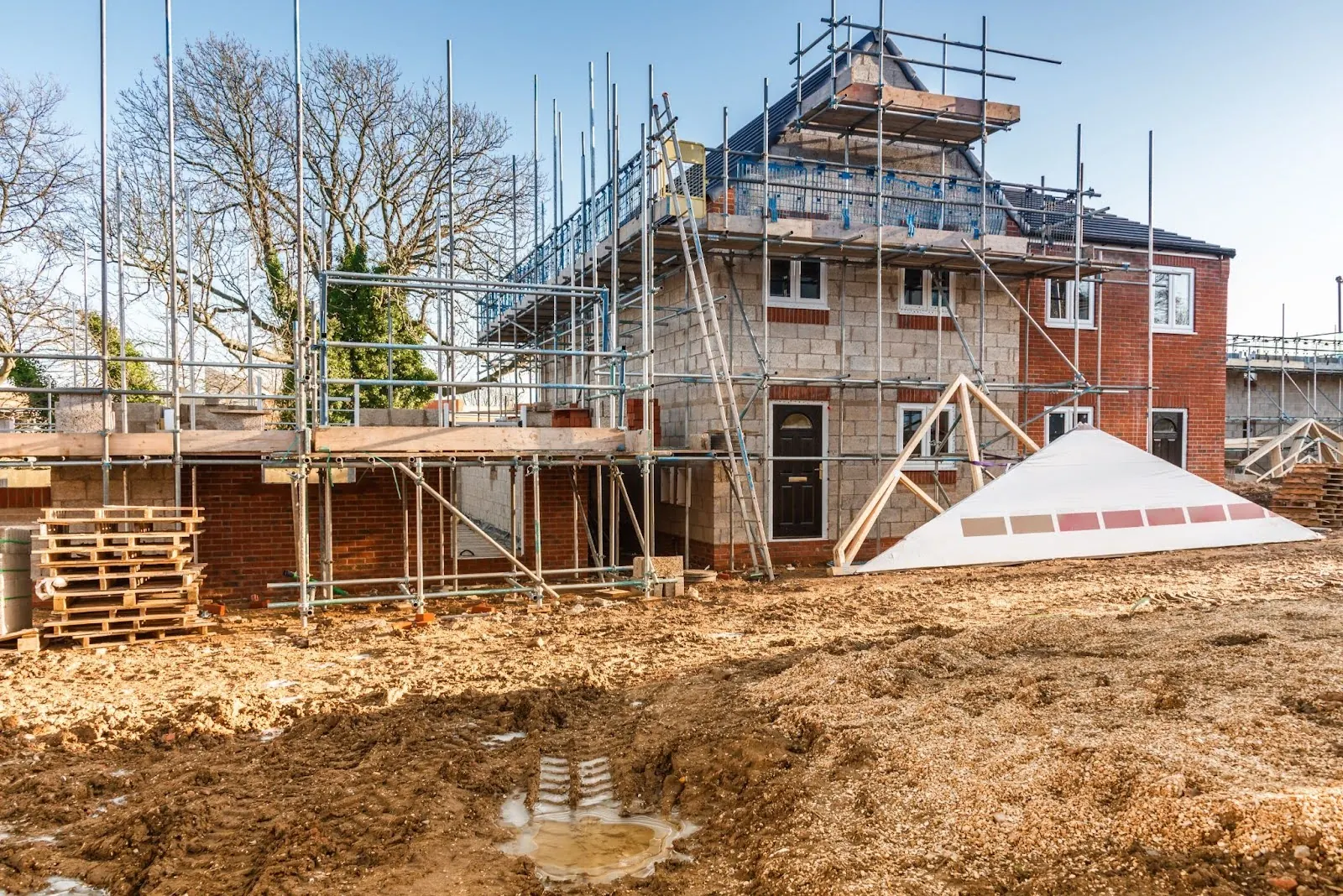
If your home no longer suits you, you have three broad choices: renovate and extend it, buy another home, or knock down and rebuild. Choosing between renovation and new construction depends on your budget, the condition of the property and what you want to achieve.
When renovation makes sense
- The structure is sound and the location is right
- You like the character of the property
- You want to keep within a lower budget
- Planning limits, such as conservation areas, restrict demolition
- You want to phase the work and perhaps live in the house throughout
Renovation can include refurbishment, structural alterations, loft or garage conversions and extensions.
When new construction makes sense
- The existing building is in poor condition or needs expensive structural repairs
- The layout is fundamentally wrong and cannot be fixed
- You want a highly energy-efficient home built to current standards
- You have a plot with consent to build, or permission to replace an existing dwelling
- You want a design built around your needs from scratch
Comparing the two
| Renovation / extension | New build / rebuild | |
|---|---|---|
| Typical build cost | Roughly £1,500–£2,500 per m² for extensions; refurbishment varies | Often higher per m² overall, but a complete new home |
| Planning | Often permitted development for smaller work | Planning permission needed |
| Time | Weeks to months | Many months, plus design and approvals |
| Surprises | More hidden problems in old buildings | Fewer, but ground conditions still matter |
| Energy efficiency | Improved with upgrades | Built to current standards |
| Disruption | Often live in the house | Usually need to move out |
Figures are general guides, not quotes.
Cost and VAT
VAT treatment differs. New-build homes are generally zero-rated for VAT, while most renovation and extension work on an existing home is standard-rated, although some conversions and special cases attract reduced rates. Rules are detailed, so take advice from an accountant or HMRC.
Planning and approvals
- Renovation and extension: many projects fall under permitted development; see planning permission for extensions.
- Knock down and rebuild: requires planning permission and usually demolition notices, and in Wales you should check requirements with Newport City Council.
- Both: building regulations apply.
Environmental impact
Reusing an existing structure saves the carbon embodied in its walls and foundations, while a new build can offer excellent operational efficiency. The best choice depends on the building. See sustainable construction.
Questions to ask yourself
- What is the condition of the existing structure?
- Can the layout be fixed within the budget?
- Are there planning limits on the site?
- How long can you live elsewhere?
- What is the value of the finished property compared with the cost?
Ask a surveyor and a builder to assess the building before you decide.
Let us look at your options
Abron Contracting handles refurbishment and extensions, and new build developments in Newport. Contact us or call 01633379170.
Frequently asked questions
Is it cheaper to renovate or rebuild?
Renovation is often cheaper when the structure is sound. Rebuilding can make sense when repairs would be extensive or the layout cannot be improved.
Can I knock down my house and rebuild?
Usually, with planning permission and building regulations approval. Check local policy first.
Do I pay VAT on a renovation?
Most work on an existing home is standard-rated, while new-build homes are generally zero-rated. Rules are detailed, so take advice.
Which is faster?
Renovation is usually faster, especially smaller projects, but timescales depend on scope.
Can I live in the house during renovation?
Often yes, for smaller projects. Large renovations and rebuilds usually require alternative accommodation.